Engineering Robust Waste Disposal: A Technical Overview of HICLOVER Incineration Systems
Engineering Robust Waste Disposal: A Technical Overview of HICLOVER Incineration Systems
Modern waste incinerators are engineered for precise thermal destruction, requiring secondary chamber temperatures exceeding 1100°C to meet stringent emission standards for medical and animal incinerators. This engineering reliability is critical for decentralized waste management in remote or crisis-prone regions, aligning with global trends in infectious disease preparedness and ESG compliance. Systems must guarantee complete combustion and pathogen destruction, a fundamental principle for any credible animal incinerator manufacturer.
Technical Design and Operational Standards
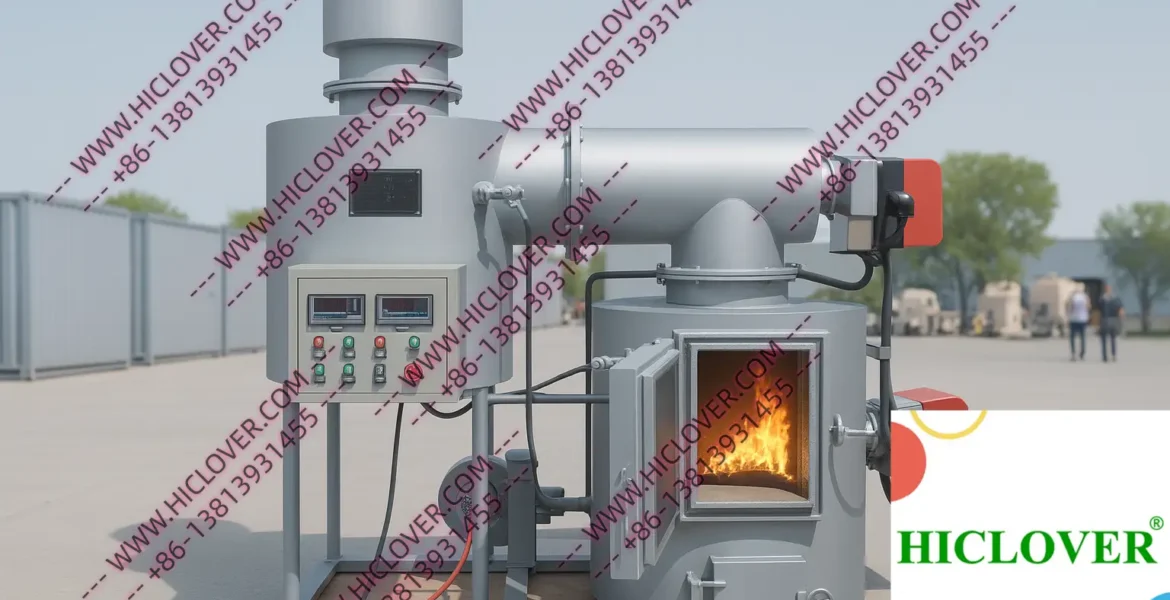
The core efficacy of a clinical or pathological waste treatment system hinges on its combustion design. Modern units feature dual-chamber configurations, where primary combustion is followed by high-temperature gas incineration in a secondary chamber. This process, often governed by WHO guidelines and EU emission frameworks, ensures the breakdown of complex hydrocarbons. For professionals verifying standards, a search such as secondary chamber temperature medical waste incinerator is common. Retention time at these elevated temperatures is as crucial as the peak temperature itself for achieving 99.99% destruction efficiency. HICLOVER systems integrate this principle with robust refractory linings and advanced burner management.
Control and Emission Abatement Configurations
Operational control varies from manual systems to fully automated PLC-controlled sequences, which enhance safety and repeatability. Emission control is a critical differentiator, with options for dry scrubbers (using lime and activated carbon) or wet scrubbers for acid gas removal. The choice impacts the system’s suitability for specific regulatory environments and site conditions. For remote sites, such as mining camps or humanitarian operations in regions like Sudan or Malawi, the logistical simplicity of a dry system is often preferred. The reported Malawi incinerator price often reflects this essential balance between technical capability and operational practicality.
System Selection for Diverse Global Applications
Selecting an appropriate incineration system involves evaluating fixed, skid-mounted, or containerized models. Containerized mobile incinerators offer significant advantages for global deployment, featuring a plug-and-play design that simplifies shipping, installation, and relocation. This modularity supports supply chain resilience, a key consideration for project planners in areas with unstable infrastructure. A factory-direct manufacturer like HICLOVER provides inherent advantages in customization, quality control, and stable supply chain management compared to trading intermediaries. Engineering experience directly translates to adaptable solutions, whether for a standard medical incinerator 20kg capacity unit or a larger, fuel-flexible system designed for challenging environments, such as an Equatorial Guinea diesel oil fired medical waste incinerator.
Fuel Flexibility and Site Adaptation
Fuel options—including diesel, LPG, and natural gas—allow systems to adapt to local energy availability. This flexibility is vital for operations in off-grid locations or regions with fluctuating fuel supplies. The design of the combustion system must accommodate these variations while maintaining consistent temperature profiles. The growing emphasis on decentralized waste management, particularly for epidemic preparedness and in remote industrial camps, underscores the need for such adaptable, robust technology. Incinerator manufacturers China, with integrated engineering and manufacturing capabilities, are pivotal in supplying these solutions globally. For detailed technical specifications and system layouts, engineers can reference resources directly on the HICLOVER website.
The evolution of waste incinerators is driven by stricter environmental regulations and the need for reliable, on-site destruction capacity. A technically sound system combines precise thermal control, appropriate emission abatement, and rugged construction for global applicability, directly addressing the commercial and transactional requirements of professional waste management.